Driveways
Paver driveways in Northridge, CA
Wide ranch approaches, flat alluvial ground, and sixty year old concrete that has run out of road. Here is how a paver driveway gets built properly on a Northridge lot, and what it costs.
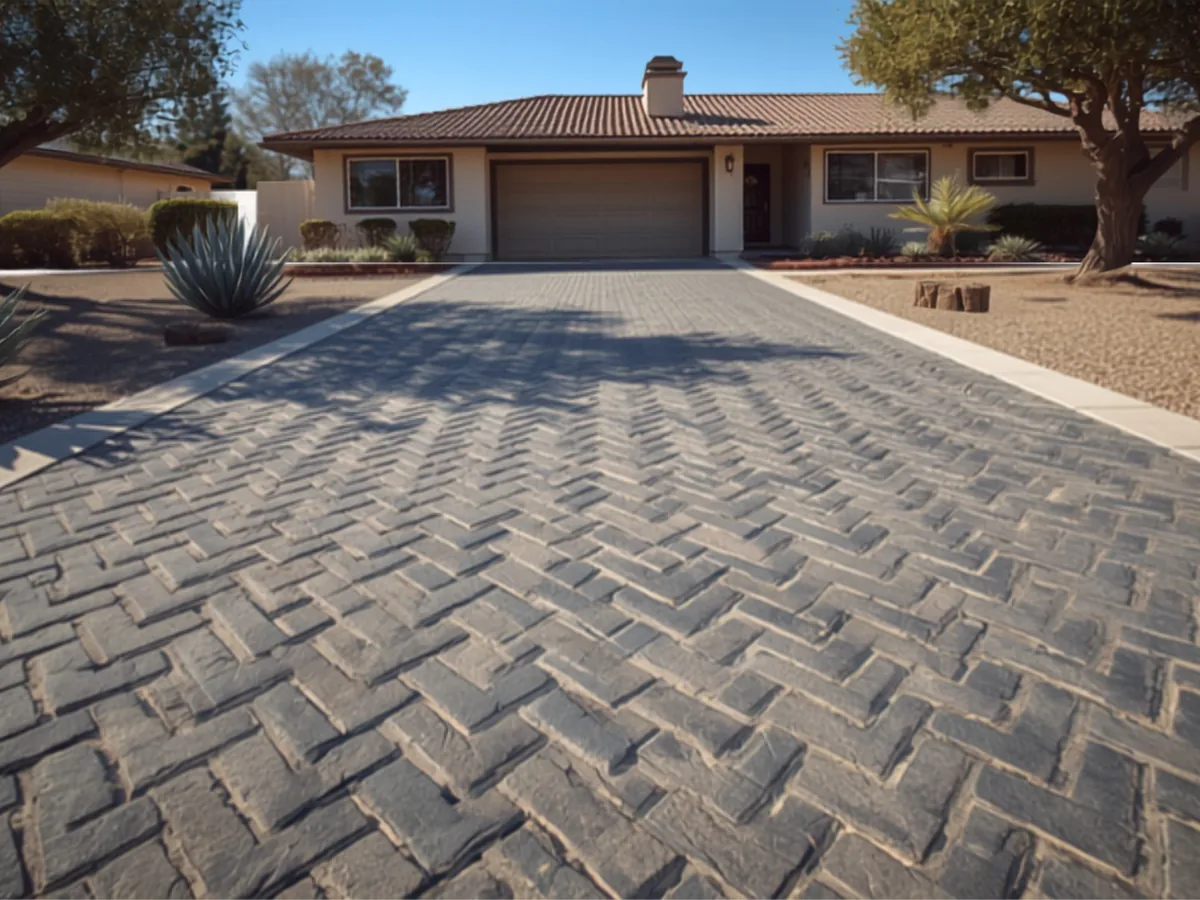
What a Northridge driveway is actually up against
Three things define the work here, and none of them are guesses. The ground is a gently sloping alluvial fan, which is to say deep, fine, well graded valley soil with essentially no natural fall. The houses are postwar ranch tracts on large lots, which means long driveways and a lot of square footage. And the surface being replaced is usually the original pour from the 1950s or 1960s, which has spent six decades cycling through 100 degree summers and the occasional seismic event.
Get the base right for those three conditions and a driveway here will outlast the car sitting on it. Skip the compaction and none of the rest matters.
The base is the entire job
Everything you can see costs less than everything you cannot. A driveway base built for vehicle weight on Northridge soil looks like this:
- Excavate ten to twelve inches. Deeper than a patio, because wheel loads concentrate stress in a way patio furniture never will.
- Compact the subgrade. The native alluvial material compacts well when it is dry and poorly when it is not, so this step gets done properly rather than quickly.
- Crushed aggregate base in lifts. Three to four inch layers, each plate compacted before the next goes down. One thick lift compacted once is the classic corner cut and it fails from the bottom.
- One inch of bedding sand, screeded flat, never used to correct base errors.
- Lay, cut, and edge. Field pavers first, then cuts at the borders, then a concrete or spiked edge restraint so the outer courses cannot creep sideways under turning tires.
- Joint sand and final compaction. Polymeric sand swept in and vibrated home. This is what makes hundreds of loose units behave as one interlocked surface.
Ground movement, the local version
Most of the country hears the word Northridge and thinks of January 17, 1994. The magnitude 6.7 epicenter sat near Reseda Boulevard and Arminta Street, about ten miles beneath the same alluvial fan the neighborhood is built on, and it produced permanent ground deformation across the Valley floor. Anyone who owned a concrete driveway that morning found out how a rigid slab responds to soil that has moved.
That is the practical case for pavers on this ground, stated without drama. A slab is one piece, so it relieves stress by cracking, and the crack shows across the whole pour. Pavers are many pieces on a flexible base with sand between them, so movement gets absorbed at the joints. When something does shift, the repair is mechanical rather than cosmetic: lift the affected units, fix the bedding, reset the same stone, and the surface reads continuous again. You are buying a driveway that can be serviced instead of one that can only be replaced. That is the reasoning Northridge paver crews bring to every surface, not only the ones cars park on.
Size, aprons, and the parts people forget
Northridge frontage is generous. A driveway drawn for a 1957 ranch home usually includes a long straight run, a widened area at the garage, and often a side pad that was never in the homeowner's mental picture of the project. Measure all of it before you compare prices, because a quote for 450 square feet against a quote for 780 is not a price comparison at all.
Two more pieces belong in the conversation early. The apron, that wedge between the sidewalk and the curb, sits in the public right of way and is permitted through the City of Los Angeles separately from the private work. And the garage threshold needs a deliberate detail so the new surface meets the slab cleanly and water is directed away from the opening rather than into it.
Drainage when the lot is dead level
Almost every driveway in Northridge starts flat, so drainage has to be constructed. The base gets cut with one to two percent of fall, run away from the house and toward the street or a planted area, and it is checked with a level rather than eyeballed. Where the garage sits low or a side yard collects, a channel drain goes in at the threshold and gets plumbed out.
The other option worth asking about is a permeable build. Open graded stone and wider joints let stormwater pass through the surface into a reservoir of clean aggregate and then into the soil, which is a genuinely useful answer on a lot with nowhere for runoff to go. It costs more up front and needs its joints kept clear, but on the flat north Valley it solves a problem that grading alone sometimes cannot.
What the week looks like
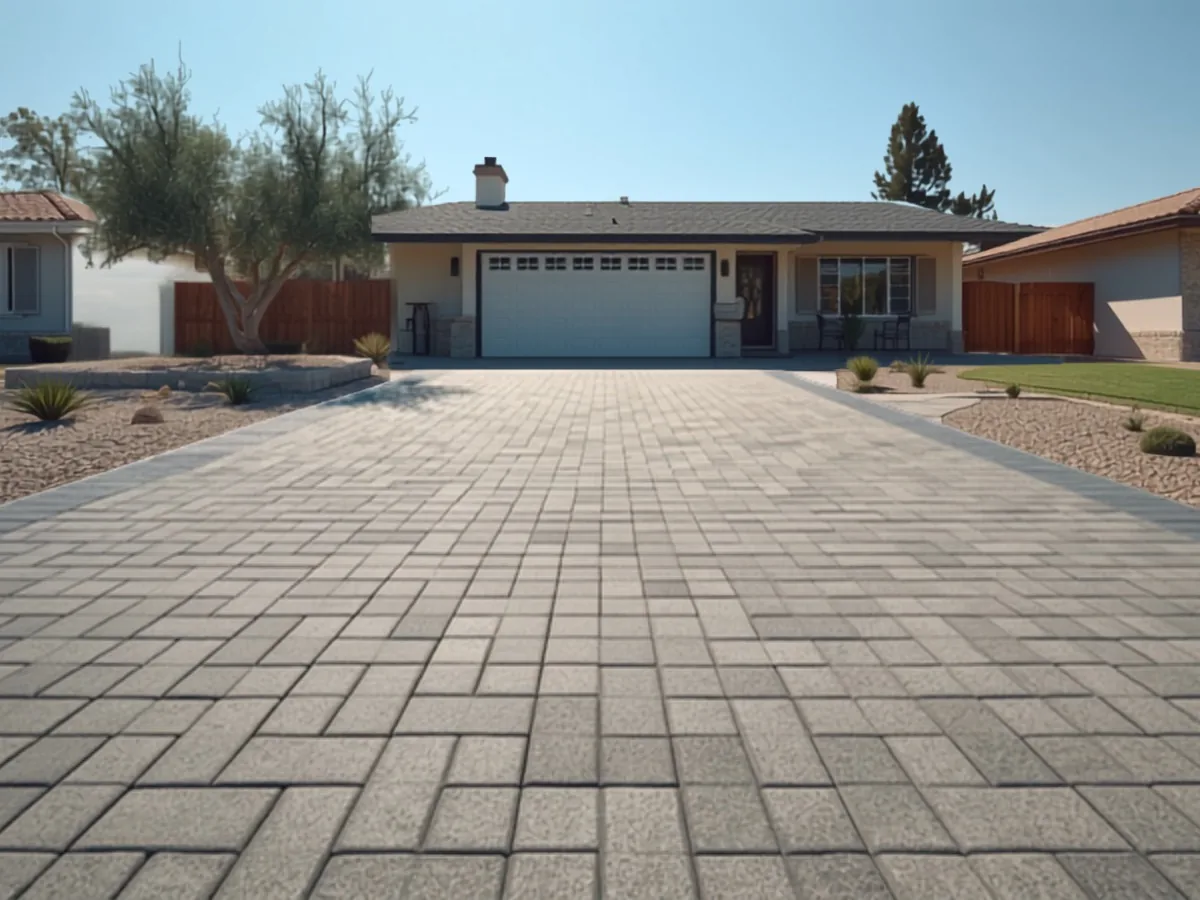
Day one is protection and demolition. The old concrete or asphalt comes out, gets loaded, and leaves the site. Day two is excavation to grade and subgrade compaction. Day three is aggregate base in compacted lifts and the drainage detail. Day four is screed, lay, and cut, which is the day it starts to look like a driveway. Day five is edge restraint, joint sand, final plate compaction, and cleanup. Larger runs, curved layouts, or an added parking pad push that to six or seven. You get the schedule in writing with the price.
Driveway pricing at a glance
| Driveway size | Standard concrete paver | Premium or tumbled line |
|---|---|---|
| 400 sq ft | $6,400 - $8,000 | $8,000 - $10,000 |
| 600 sq ft | $9,600 - $12,000 | $12,000 - $15,000 |
| 800 sq ft | $12,800 - $16,000 | $16,000 - $20,000 |
Removing an existing slab and hauling it away is the most common addition to these figures. The full breakdown lives in the Northridge cost guide.
Ground movement affects the back yard the same way. See patio and pool deck work in Northridge.
Driveway fields and apron details are set out in the gallery.
Get your driveway measured.
A licensed contractor walks it, measures it, checks the drainage, and hands you one fixed written price. Free, and nothing to sign on the spot.
Get a fast quoteBefore you rebuild the drive
How long does a paver driveway take to install in Northridge?
Most Northridge driveways are finished in three to seven working days. Demolition and haul off of an old slab takes the first day or two, base excavation and compaction takes the next two, and laying, cutting, and compacting the pavers closes it out. Weather rarely interferes here outside a winter storm.
Can I park on it right away?
Foot traffic is fine the same afternoon the joints are locked in. Vehicles can go back on once the final plate compaction and joint sand are done, which is normally the last day of the job. There is no cure time to wait out the way there is with a poured slab.
What thickness of paver do I need for a driveway?
Use an 80mm unit for anything carrying vehicles. The 60mm pavers sold for patios and walkways are not rated for wheel loads, and putting them under a car is the single most common shortcut that shows up as rutting a few years later.
Will a paver driveway crack like my old concrete did?
It does not crack as a surface, because it is not one surface. A paver driveway is hundreds of separate units on a flexible base, so ground movement is taken up in the sand joints instead of splitting a slab. If a section ever settles, the units lift out, the bedding is corrected, and the same stone goes back down.